
Can AI Video Earn ¥10,000 a Month? A Seedance 2.5 Creator Workflow
A practical Seedance 2.5 workflow for selling UGC ads, short-drama pilots, and product demos, with clear pricing, cost control, and realistic profit examples.
Can AI video earn ¥10,000 a month? It can support a business that reaches that revenue, but the generator does not create the business for you. A creator still needs a sellable offer, a specific buyer, reliable delivery, and enough margin to survive revisions. This guide turns Seedance 2.5 creator workflow ideas into three practical services: UGC-style ads, vertical short-drama pilots, and product demonstrations.
The numbers below are planning examples, not earnings claims. They show what would have to be sold to cross ¥10,000 in monthly gross revenue and how to calculate what remains after production costs.
The short answer
- Sell a defined outcome, such as three ad concepts or one short-drama pilot, instead of selling “AI videos.”
- Use one niche and one repeatable format until the brief, prompt, edit, and revision process become predictable.
- Treat X as a proof-and-conversation channel: publish a strong sample, explain the process, then contact relevant buyers with a specific observation.
- Quote for strategy, editing, licensing administration, and revisions—not only generated seconds.
- Budget for rerolls. One final shot can require several successful generations.
- Measure monthly net income, not screenshots of gross sales.
What clients actually buy from an AI video creator
Clients rarely care which model rendered a shot. They care whether the asset fits a campaign, arrives in the required aspect ratio, and can be revised without the project drifting out of scope. Your offer should therefore name the business use, deliverables, turnaround, and revision boundary.
| Service | Practical first buyer | Productized deliverable | Main production risk |
|---|---|---|---|
| UGC-style ad package | DTC brand, app, or local service | 3 hooks, 1 core concept, 3–6 edited variants | Claims, product accuracy, and inconsistent talent |
| Vertical short-drama pilot | Studio, publisher, or IP owner | 45–90 second pilot, character references, subtitle-ready master | Character continuity and narrative clarity |
| Product demonstration | SaaS team, marketplace seller, or agency | 15–30 second demo with product shots, labels, and CTA versions | Invented product details or misleading behavior |
Seedance 2.5 is useful when a project benefits from multimodal references and controlled revisions. Start by checking the current Seedance 2.5 workspace, then choose the input method that matches the brief. Image-to-video suits approved product photography, while reference-to-video helps carry a character or visual direction across shots. Use video editing for targeted changes instead of rebuilding every accepted element.
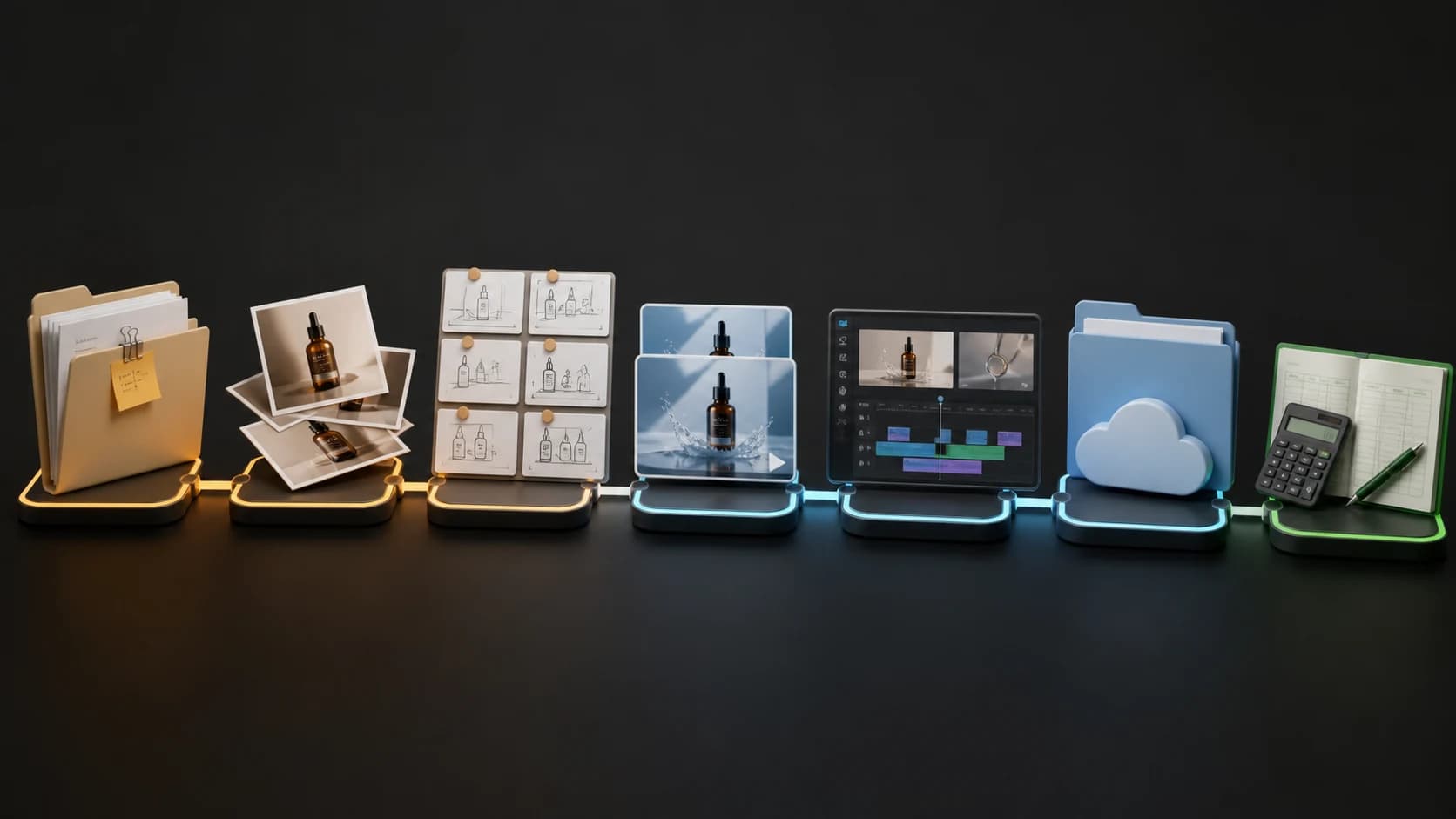
A six-step X-to-client workflow
The most credible sales asset is not a claim about what AI can do. It is a short sample that looks like work a buyer could commission. Build the acquisition process around that proof.
1. Publish one niche-specific spec clip
Choose a narrow buyer and make a sample for their normal use case: a skincare launch hook, a mobile-game character teaser, or a 20-second feature demo. Label it as spec work if it was not commissioned. A focused sample makes it easier for a prospect to imagine a paid version than a general showreel does.
2. Add a process breakdown
Post the final clip first, then show the useful production decisions: reference selection, shot plan, rejected versions, continuity fixes, and final edit. Do not present every render as a success. Showing what you corrected demonstrates judgment—the part a client is actually hiring.
3. Start targeted conversations
Build a short list of brands, founders, agencies, or studios whose existing content matches your format. Reply thoughtfully when there is a genuine fit, or send a concise message that identifies one concrete opportunity. “I made a 12-second alternative hook for your current product launch” is stronger than a bulk message offering generic AI video services.
4. Turn interest into a productized offer
Offer a small paid pilot with a fixed output. For example: three vertical ad openings, one edited 15-second master, two aspect ratios, and one revision round. The buyer can approve a contained experiment, while you learn how expensive their feedback is before quoting a larger campaign.
5. Put the scope in writing
Record the concept, duration, formats, source assets, delivery date, revision count, usage, payment schedule, and approval owner. Also state what counts as a revision versus a new concept. Written scope prevents “one small change” from turning a profitable package into unlimited regeneration.
6. Deliver with a short report
Provide clearly named files plus a one-page note: the intended hook, variant differences, any product details the client must verify, and suggested test order. Ask for performance data when the client can share it. That information helps you improve the next package without pretending a creative asset guarantees conversions.
Path 1: package UGC-style ads without faking UGC
UGC-style ads are a good entry offer because brands need multiple hooks and variations. The safe product is a clearly disclosed synthetic or stylized creative package—not a fabricated customer testimonial. Avoid invented reviews, unsupported before-and-after results, or a synthetic spokesperson presented as a real buyer.
A starter package might include three hook scripts, one approved visual direction, one 15-second master, three opening variants, captions, and one revision round. Ask the client to approve product claims before generation. If an actual person’s likeness or voice is involved, obtain documented permission.
Use approved pack shots as image-to-video references, generate short scenes, and assemble the strongest moments in an editor. The margin comes from reusable planning and variation, not from producing one long, fragile generation.
Path 2: sell a vertical short-drama pilot
A short-drama pilot is easier to approve than an entire series. Sell a compact proof of concept: a hook, two or three story beats, a recurring character sheet, and an ending that creates a reason to watch the next episode.
Break a 45–90 second pilot into shots with a clear narrative job. Lock character references and wardrobe before generating action, then keep dialogue, music, subtitles, and pacing in the edit. Reference-to-video can support continuity, but every shot still needs review for faces, hands, props, screen direction, and story logic.
Price the pilot for development work as well as output: script adaptation, visual references, shot planning, generation, edit, sound, and bounded revisions. If the client commissions a series, build a separate episode rate after the pilot reveals the true workload.
Path 3: create product demos that stay accurate
Product demos sell well when they make a feature easier to understand. They also carry a higher accuracy burden. An AI-generated interface should never imply that a button, result, or physical feature exists when it does not.
For software, combine genuine screen recordings with generated transitions, environments, or presenter shots. For physical goods, begin with approved photography and preserve distinguishing details such as shape, color, ports, packaging, and labels. Use video editing to correct a local element when possible, and route every factual claim back to the client for approval.
A useful package can contain a 20-second master, a six-second cutdown, vertical and square exports, captions, and two CTA endings. This gives the buyer testable assets while keeping the production scope measurable.
Calculate cost before you quote
Generation is only one line in the budget, but it must be measured. BytePlus publishes an official Seedance 2.5 example for a five-second 1280 × 720 output at 24 fps with no video input. Its formula estimates 108,000 tokens, and the listed rate of $10.70 per million tokens produces a cost of $1.156 for that successful generation.[1]
Estimated tokens = 5 × 1280 × 720 × 24 ÷ 1024
                 = 108,000

Estimated cost = 108,000 ÷ 1,000,000 × $10.70
               = $1.1556 ≈ $1.156
This is a reproducible upstream example, not a universal Seedance 2.5 price and not a quote from reAPI or another retail platform. Video input, longer duration, different specifications, platform credits, markups, tax, and billing policy can all change the invoice. See the full Seedance 2.5 pricing explanation and check the platform’s current plans and pricing before quoting paid work.
More importantly, multiply the per-attempt cost by the number of successful attempts, not by the final clip count. Six five-second shots with an average of three successful versions each would mean 18 billable generations. At the official example rate, the upstream reference cost would be $20.808. Editing, writing, sound, and your time still need separate budget lines.
Use this operating formula:
Monthly net income = (package price × paid orders)
                   − generation costs
                   − reroll allowance
                   − editing, voice, and music costs
                   − platform and payment fees
                   − applicable taxes
Track actual invoice cost and keeper rate after every project. If a format needs too many rerolls, tighten the references, reduce shot complexity, or raise the quote.
Three illustrative ways to cross ¥10,000 gross
These scenarios are arithmetic examples, not reported creator results. They exclude refunds and all expenses, so none of them represents take-home income.
| Service mix | Illustrative sales math | Monthly gross |
|---|---|---|
| UGC-style ad packages | 5 packages × ¥2,200 | ¥11,000 |
| Vertical short-drama pilots | 2 pilots × ¥5,500 | ¥11,000 |
| Product-demo packages | 4 packages × ¥2,800 | ¥11,200 |
The right target depends on capacity. Five smaller packages create more sales and revision conversations; two pilots concentrate risk in larger projects; four product demos require tighter factual review. Before choosing, estimate hours and rerolls for one pilot order, then calculate how many can be delivered without missing deadlines.
Do not discount the first project so deeply that it cannot reveal a sustainable price. A limited pilot can be smaller, but it should still cover direct cost and a reasonable share of your time.
Keep the workflow commercially safe
Client-supplied media is not automatically cleared for every use. Before production, identify who owns the product images, characters, music, footage, voice, and likenesses. Confirm the current terms of the generation platform and the client’s intended commercial usage. Keep approvals and source files with the project record.
Synthetic people and demonstrations also need clear review. Do not invent testimonials, imitate a real person without permission, or create deceptive evidence of product performance. When the final asset is an ad, the client remains responsible for its claims, but a professional creator should flag anything that cannot be substantiated.
FAQ
Is ¥10,000 a month realistic for a new AI video creator?
It is a plausible gross-revenue target, not a guaranteed outcome. Reaching it requires enough paid orders at a sustainable price. Start by validating one offer with a small paid pilot and track net income rather than assuming the examples above will transfer to your market.
Do I need a large X following to find clients?
No large audience is required to show relevant proof, although reach can help. A narrow sample and thoughtful outreach may be more useful than broad follower count. Avoid spam; contact fewer prospects with a specific reason the sample fits their work.
How should I price an AI video package?
Price the complete outcome: concept, source preparation, generation, edit, sound, formats, usage administration, project management, and revisions. Estimate direct cost and hours first, then add margin and a reroll allowance. Do not quote only by generated second.
How many generations should I budget for each final shot?
There is no reliable universal number. Run a small production sample, record the successful attempts needed per keeper, and use that rate in the quote. Complex action, strict product fidelity, and character continuity generally deserve a larger contingency.
Can AI-generated UGC and product demos be used commercially?
Commercial use depends on platform terms, input rights, likeness and voice permissions, music rights, and the truthfulness of advertising claims. Verify the current terms for the account and campaign; a watermark-free export alone does not settle those rights.
Which service should I start with?
Choose the one that matches assets you can already judge. Marketers may begin with UGC-style variants, storytellers with one short-drama pilot, and product designers with accurate demos. Build one repeatable package before adding a second service.
Build one offer, then improve its economics
An AI video workflow can support ¥10,000 in monthly gross revenue, but income comes from solving a buyer’s problem repeatedly. Pick one niche, publish a relevant sample, sell a bounded pilot, document the scope, and measure the real cost of every keeper. Seedance 2.5 can shorten production; your offer, judgment, and client process determine whether the work becomes a business.
References
- BytePlus ModelArk. Model pricing — Video generation models. Retrieved August 2026 from docs.byteplus.com/en/docs/ModelArk/1544106
Author

Categories
More Posts

Seedance 2.1: What's Real Behind the Release Rumors
Chinese media said Seedance 2.1 was about to ship with a 20% quality boost. ByteDance denied it the same day. Here's what's verified and what's rumor.

How to make an anime music video with AI, step by step
Learn how to make an anime music video with AI: lock a character's look with reference-to-video, then cut every scene to the beat with a beat-sync tool.

How to Animate a Photo With AI: A Practical Guide
Learn how to animate a photo with AI: how to pick a source image, control motion strength, and three tested recipes for old photos, portraits, and landscapes.